
Ph.D. in
Rehabilitation Sciences


Degree
Ph.D. in Rehabilitation Sciences

Duration
8 Semesters

School
Rehabilitation Sciences

2027 Admission
The 2027 admissions process for this Ph.D. program closed on September 4.
Overview
Rehabilitation is a growing field within healthcare and has been shown to have a significant impact on people’s quality of life. However, stronger scientific evidence, the generation of new knowledge, and the development of new tools and strategies are needed to improve health in current and future health and social care contexts.
The Ph.D. in Rehabilitation Sciences, offered by the Institute of Exercise and Rehabilitation Sciences, is the first and only Ph.D. program in this field in Chile. It promotes academic excellence, high-impact research, and the development of advanced human capital in the health sciences.
Graduates of this program will be researchers whose work is grounded in the values of excellence, integrity, respect, pluralism, and responsibility upheld by Universidad Andrés Bello. Their education is based on generating new knowledge from the available scientific evidence to advance rehabilitation sciences. To this end, the program uses clinically oriented and complex experimental approaches to elucidate the biomechanical, neurophysiological, and physiological mechanisms involved in adaptations induced by rehabilitation interventions, with human movement as the object of study and the improvement of people’s well-being as its goal.
Human movement is the cornerstone of this Ph.D. program and is examined through three research lines: Exercise Sciences; Musculoskeletal Rehabilitation; and Neurorehabilitation, Mental Health, and Cognition. This provides an excellent educational experience supported by faculty and research lines that meet the University’s quality standards. The program also incorporates a range of disciplinary requirements in the health sciences to address its internal and external needs.
The Ph.D. in Rehabilitation Sciences is a full-time, in-person program. Competitive tuition-waiver and living-expense scholarships are available. Admitted students may also apply for funding through the National Doctoral Scholarship Program offered by the National Agency for Research and Development (ANID).
General Objective
Specific Objectives
The specific objectives of the program are:
- Develop the skills needed to generate high-impact knowledge through human movement in exercise sciences, musculoskeletal rehabilitation, neurorehabilitation, mental health, and cognition.
- Promote scientific critical thinking by integrating prior knowledge and applying it to current health conditions and healthcare needs in national and international contexts.
- Provide tools for designing and conducting research projects using different scopes and study designs to advance knowledge in the discipline and help address relevant problems.
- Promote knowledge transfer through the oral and written dissemination and scientific communication of research findings to specialized and general audiences.
Graduate Profile
Graduates of the Ph.D. in Rehabilitation Sciences at Universidad Andrés Bello are independent researchers with the knowledge, skills, and abilities to design, conduct, and disseminate original research projects in rehabilitation sciences. Their work focuses on human movement through the following research lines: Exercise Sciences; Musculoskeletal Rehabilitation; or Neurorehabilitation, Mental Health, and Cognition.
Graduates have the analytical and critical-thinking skills to conduct advanced research by identifying, formulating, and connecting relevant health problems and using experimental methodologies to improve functional performance and health-related quality of life.
Program Research Areas
This research line enables students to investigate responses and adaptations to physical activity, exercise, and healthy lifestyles in healthy individuals and people with health conditions.
Proposed Core Topics:
1-Physiological basis of responses and adaptations to exercise in healthy individuals and people with health conditions.
2-Mechanisms underlying exercise-induced adaptations in different health conditions.
3-Chronic effects and adaptations induced by exercise-based and/or healthy-lifestyle interventions in healthy populations and populations with health conditions.
This research line enables students to investigate the effects of physical rehabilitation on recovery from musculoskeletal conditions and chronic pain.
Proposed Core Topics:
1-Clinical biomechanics and disability assessment.
2-Pathophysiology of inflammation, acute pain, and tissue regeneration.
3-Lifestyle factors associated with chronic musculoskeletal pain.
4-Clinical and instrumental assessment methods (kinetics, kinematics, and EMG) for patients with musculoskeletal conditions.
5-Pathophysiology of inflammation and chronic pain.
6-Effects of therapeutic interventions in people with musculoskeletal conditions.
7-Ergonomic risk assessment for adapting environments and preventing musculoskeletal injuries.
This research line enables students to investigate the neurophysiological and behavioral mechanisms associated with neurological, cognitive, and mental health conditions across the lifespan. Students can also design and evaluate interventions that may improve people’s functioning, participation, and quality of life.
Proposed Core Topics:
1-Neurophysiological basis of neurological, cognitive, and mental health conditions.
2-Relationship between functional and neuroplastic changes induced by evidence-based therapies across the lifespan.
3-Variables associated with cognitive and mental health difficulties across the lifespan.
4-Mechanisms of action of interventions for neurological, cognitive, and mental health difficulties.
5-Mechanisms and effects of movement-based interventions on cognition in healthy individuals and people with neurological conditions.
6-Effects of healthy lifestyle habits on mental health.
Exercise Sciences
This research line enables students to investigate responses and adaptations to physical activity, exercise, and healthy lifestyles in healthy individuals and people with health conditions.
Proposed Core Topics:
1-Physiological basis of responses and adaptations to exercise in healthy individuals and people with health conditions.
2-Mechanisms underlying exercise-induced adaptations in different health conditions.
3-Chronic effects and adaptations induced by exercise-based and/or healthy-lifestyle interventions in healthy populations and populations with health conditions.
Musculoskeletal Rehabilitation
This research line enables students to investigate the effects of physical rehabilitation on recovery from musculoskeletal conditions and chronic pain.
Proposed Core Topics:
1-Clinical biomechanics and disability assessment.
2-Pathophysiology of inflammation, acute pain, and tissue regeneration.
3-Lifestyle factors associated with chronic musculoskeletal pain.
4-Clinical and instrumental assessment methods (kinetics, kinematics, and EMG) for patients with musculoskeletal conditions.
5-Pathophysiology of inflammation and chronic pain.
6-Effects of therapeutic interventions in people with musculoskeletal conditions.
7-Ergonomic risk assessment for adapting environments and preventing musculoskeletal injuries.
Neurorehabilitation, Mental Health, and Cognition
This research line enables students to investigate the neurophysiological and behavioral mechanisms associated with neurological, cognitive, and mental health conditions across the lifespan. Students can also design and evaluate interventions that may improve people’s functioning, participation, and quality of life.
Proposed Core Topics:
1-Neurophysiological basis of neurological, cognitive, and mental health conditions.
2-Relationship between functional and neuroplastic changes induced by evidence-based therapies across the lifespan.
3-Variables associated with cognitive and mental health difficulties across the lifespan.
4-Mechanisms of action of interventions for neurological, cognitive, and mental health difficulties.
5-Mechanisms and effects of movement-based interventions on cognition in healthy individuals and people with neurological conditions.
6-Effects of healthy lifestyle habits on mental health.
Program Curriculum
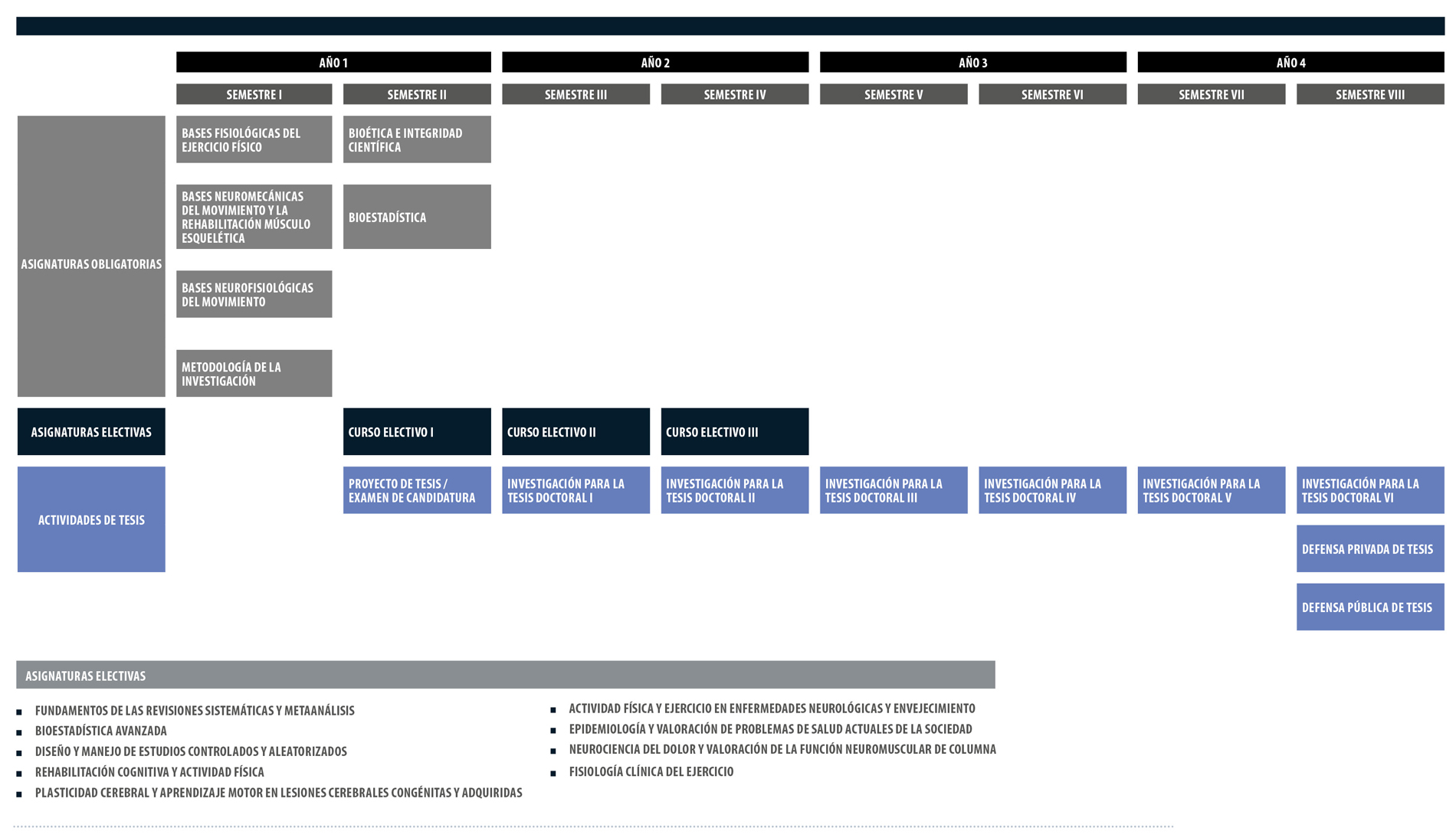
Ph.D. Program Professors
Cristian Álvarez
Physical Education Teacher. Ph.D. in Health Sciences, Public University of Navarre, Spain
Research Line: Effects of exercise on vascular physiology and in health conditions such as hypertension and cancer.
cristian.alvarez@unab.cl See moreRodrigo Araneda
Physical Therapist. Ph.D. in Biomedical and Pharmaceutical Sciences, Université Catholique de Louvain, Belgium
Research Line: Pediatric neurorehabilitation and the neurophysiological foundations of central nervous system development.
rodrigo.araneda@unab.cl See moreChristian Campos
Physical Therapist. Ph.D. in Physical Activity and Health, University of Granada, Spain
Research Line: Cognitive adaptations induced by physical activity and exercise across the lifespan.
christian.campos@unab.cl See moreLidia Castillo
Physical Therapist. Ph.D. in Neurosciences, Autonomous University of Barcelona, Spain
Research Line: Translational neuroscience in neurodegenerative diseases and aging.
lidia.castillo@unab.cl See moreFalonn Contreras-Osorio
Speech-Language Pathologist. Ph.D. in Educational Sciences, University of Granada, Spain
Research Line: Effects of exercise and physical activity on mental health and cognition.
falonn.contreras@unab.cl See moreHernán de la Barra
Physical Therapist. Ph.D. in Physical Therapy, Federal University of São Carlos, Brazil
Research Line: Management of musculoskeletal pain using electrophysical agents, manual therapy, and therapeutic exercise.
hdelabarra@unab.cl See moreCarlos de la Fuente
Physical Therapist. Ph.D. in Physiological Sciences, with a specialization in Biomechanics, Federal University of Pampa, Brazil
Research Line: Clinical biomechanics and musculoskeletal rehabilitation using in vitro, in silico, and in vivo models.
carlos.delafuente@unab.cl See moreDaniela Ebner
Physical Therapist. Ph.D. in Movement Sciences, Université Catholique de Louvain, Belgium
Research Line: Adult neurorehabilitation and the effects of neurorehabilitation following stroke.
daniela.ebner@unab.cl See moreEdith Elgueta
Physical Therapist. Ph.D. in Physical Therapy, University of Queensland, Australia
Research Line: Corticospinal excitability and the neurophysiology of chronic pain management.
edith.elgueta@unab.cl See moreMarcelo Flores
Physical Therapist. Ph.D. in Medicine, Dentistry, and Health Sciences, University of Melbourne, Australia
Research Line: Muscle quality across the lifespan, with an emphasis on childhood and adolescence.
marcelo.flores@unab.cl See moreDaniel Jerez
Physical Therapist and Physical Education Teacher. Ph.D. in Biomedicine, University of Granada, Spain
Research Line: Muscle quality and adaptations to exercise under different health conditions.
daniel.jerez@unab.cl See moreAndrea Mira
Occupational Therapist. Ph.D. in Developmental Sciences and Psychopathology, Universidad del Desarrollo
Research Line: Neurodevelopment in full-term and preterm infants; effectiveness of public policies on child development.
andrea.mira@unab.cl See moreMatías Monsalves
Bachelor's Degree in Physical Education. Ph.D. in Nutrition and Food Science, Universidad de Chile
Research Line: Mechanisms of action of exercise and nutritional ergogenic aids in the treatment of noncommunicable diseases.
matias.monsalves@unab.cl See moreLuis Peñailillo
Physical Therapist. Ph.D. in Exercise Sciences, Edith Cowan University, Australia
Research Line: Physiological adaptations to exercise in health and disease; sarcopenia.
luis.penailillo@unab.cl See moreRodrigo Ramírez
Physical Education Teacher. Ph.D. in Health Sciences, Public University of Navarre, Spain
Research Line: Adaptations to plyometric exercise in athletes and populations with health conditions.
rodrigo.ramirez@unab.cl See moreÁlvaro Reyes
Physical Therapist. Ph.D. in Medical Sciences, Edith Cowan University, Australia
Research Lines: Neurorehabilitation; Mental Health and Cognition
alvaro.reyes@unab.cl See moreWaleska Reyes
Physical Therapist. Ph.D. in Biomedicine, University of Granada, Spain
Research Line: Effects of core strength training in healthy individuals, athletes, and people with low back pain.
waleska.reyes@unab.cl See moreMarcelo Tuesta
Physical Therapist. Ph.D. in Physiology, University of Barcelona, Spain
Research Line: Cardiopulmonary responses and adaptations to exercise in cardiovascular and respiratory disease; oxidative stress and pulmonary inflammation.
marcelo.tuesta@unab.cl See moreMayalen Valero
Physical Education Teacher. Ph.D. in Biomedical Sciences, Universidad Andrés Bello, Chile
Research Line: Molecular physiology of exercise and skeletal muscle as a systemic regulator in health and cancer.
mayalen.valero@unab.cl See moreCollaborating Faculty
Enrique Cerda
Ph.D. in Biomedicine, University of Granada, Spain
Research Lines: Neurorehabilitation; Mental Health and Cognition
See moreClaudio Chamorro
Ph.D. in Physical Activity and Health, University of Granada, Spain
Research Line: Musculoskeletal Rehabilitation
See moreFrancisco Guede
Ph.D. in Biomedicine, University of Granada, Spain
Research Line: Musculoskeletal Rehabilitation
See moreClaudia Miranda
Ph.D. in Biomedicine, University of Granada, Spain
Research Line: Exercise Sciences
See moreNuria Perez
Ph.D. in Psychology, University of Málaga, Spain
Research Lines: Neurorehabilitation; Mental Health and Cognition
See morePaula Plaza
Ph.D. in Biomedical and Pharmaceutical Sciences, Université Catholique de Louvain, Belgium
Research Lines: Neurorehabilitation; Mental Health and Cognition
See moreGabriel Rojas
Ph.D. in Science, with a specialization in Applied Cellular and Molecular Biology, Universidad de La Frontera, Chile
Research Line: Exercise Sciences
See moreVisiting Faculty
Yannick Bleyenheuft
Université Catholique de Louvain, Belgium
Luis Chirosa
University of Granada, Spain
Eduardo Cofre-Lizama
Swinburne University of Technology, Australia
Travis Cruickshank
Edith Cowan University, Australia
Paul Hodges
University of Queensland, Australia
Vincent Martin
Université Clermont Auvergne, France
Eduardo Martínez
University of Birmingham, United Kingdom
Ken Nosaka
Edith Cowan University, Australia
Caterina Pesce
Michigan State University, United States
Spyridoula Vazou
Michigan State University, United States
Requirements
A. Application Requirements
Applicants must submit the following documents:
- Application Form (see below). Download and complete the requested information.
- Notarized copy of the academic degree certificate*
- Undergraduate transcript
- Undergraduate class rank certificate
- If you have completed graduate studies, attach a notarized copy of the degree certificate and transcript.
- Master’s degree class rank certificate (if applicable)
- Copy of both sides of the Chilean identity card or a digital birth certificate. International applicants without a Chilean identity card may submit a copy of their passport.
- Curriculum vitae
- Statement of purpose describing your interests and reasons for applying to this program and Universidad Andrés Bello
- Preliminary research proposal in one of the program’s research lines (see template)
- Two letters of recommendation sent by each recommender from their email address to docrehabilitacion@unab.cl (see template)
- Interview and admission exam before the Academic Committee (in person)
* Academic degrees awarded by foreign institutions must be equivalent to those specified in the Program Decree. Applicants who are admitted must submit all documentation required by the University to the Ph.D. Program Office to complete the enrollment process.


 contact us